
Monday, June 30, 2008
Peculiar Pierce Memorabilia
Doing a search of blogs at Wordpress.com has turned up a few interesting Franklin Pierce related posts. First I learned that Amazon.com sells apparel such as T-shirts, bibs and onesies displaying the handsome visage of our 14th President. Next, I found a (mercifully) short-lived attempt at a Franklin Pierce comic strip. And finally, one blogger owns a piano from the Francestown (NH) Academy, where Franklin Pierce was a student. Whether he actually played the piano is unknown to me, but it makes for a nice Washington-slept-here type story.


Friday, June 27, 2008
Franklin Pierce Praised

New Hampshire man Elting E. Morison wrote a piece entitled "In Praise of Pierce" in the August/Sept. 1985 issue of American Heritage Magazine.
Franklin Pierce Dissed Again
On Feb. 6, 2007, US News and World Report posted an article on the ten worst Presidents in U.S. history. Franklin Pierce came in #4.
Saturday, June 21, 2008
The Big Peach


Fans of oversized food will want to travel down Highway 41 to the Bruceville, Indiana area to see the Big Peach. It stands outside a produce market, and bears an uncanny resemblance to the Trylon and Perisphere of the 1939 New York World's Fair. Well, OK, the tower is an obelisk and is only about 20 feet tall, while the Trylon was a three-sided spire about about 700 ft. tall. And, yes, the Trylon and Perisphere were the only structures on the World's Fair grounds painted pure white, while the obelisk and peach are shades of orange. But you have to admit that it's a weird example of serendipity that this picture I took of the peach a few years ago has a very similar perspective as the picture postcard of the Trylon and Perisphere I just found online.
Groucho Sings "Father's Day"
Thanks to a comment left by kt, here's a link to a studio version of Groucho singing "Father's Day." Till now, I had only heard the live version on the album An Evening With Groucho.
Wednesday, June 18, 2008
Lydia the Tattooed Lady Revealed
This post, along with many others about the Marx Brothers, also appears in its entirety at my other blog, The Marx Brothers.

A lot of landmark events occurred in 1939. The New York World's Fair opened. Hitler invaded Poland. The movie The Wizard of Oz premiered, and the Marx Brothers movie At the Circus was released. Harold Arlen and lyricist E.Y. "Yip" Harburg wrote songs for both the Wizard of Oz and At the Circus. Groucho's performance of "Lydia the Tattooed Lady" is a classic.
As I pointed out in an earlier post about the song Cuban Pete, the internet is littered with inaccuracies. The World Wide Web abounds in multiple copies of a mistaken transcription of Groucho's introduction to "Lydia." What shows up in this transcription is:
My life was wrapped around the circus.
Her name was Lydia.
I met her at the World's Fair in 1900,
marked down from 1940.
Ah, Lydia.
She was the most glorious creature under the sun.
Guiess. Dubarry. Garbo.
Rolled into one.
If you watch the above clip from the movie, you'll see that when Groucho lists the three beauties that were all rolled into Lydia, the first one sounds like it rhymes with "vice". According to Nick Markovich, administrator/archivist of the Yip Harburg foundation, this was Thaïs, an Athenian courtesan who allegedly convinced Alexander the Great to burn the palace of Persepolis. Jules Massanet wrote an opera called Thaïs. The Scottish soprano Mary Garden made her American premiere in the title role. The other two women were Madame du Barry, mistress of Louis XV, and famed actress Greta Garbo. Interestingly, Yip Harburg also wrote lyrics for a song ("Salome") which was sung by Virginia O'Brien in the 1943 movie Du Barry Was a Lady.


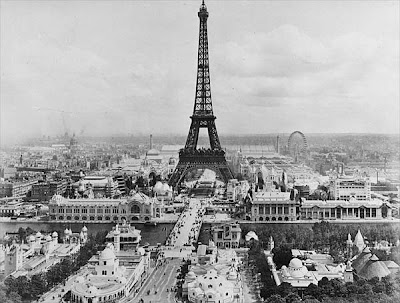
The joke about the World's Fairs in Groucho's intro refers to the Expositon Universelle in Paris in 1900, and the New York World's Fair, 1939-1940.

There are many historical and topical references in the song itself:
Battle of Waterloo - Napolean's final defeat by the Duke of Wellington

Wreck of the Hesperus - a poem by Longfellow, based on events that occurred during a blizzard off the east coast of the United States in 1839. In the poem, a sea captain's daughter is tied to the mast of a ship to keep her from being washed overboard during a storm, but both she and her father die.

Kankakee - a town in Illinois

Paree - the one in France. You've heard of it--it's been in all the papers

Washington Crossing the Delaware - the famous painting by Emanuel Leutze of the beginning of the surprise attack on the Hessians in Trenton, New Jersey, Decemeber 25, 1776

Andrew Jackson - colonel in the Tennessee militia in the War of 1812 and later President of the U.S.

mazurka - a Polish dance

Niagara - the Falls--you know, the big ones between New York and Canada

Alcatraz - the island in San Francisco Bay that used to be a prison

Buffalo Bill - William F. Cody, of Wild West Show fame

Just a little classic by Mendel Picasso - This is the most puzzling phrase in the song, and one for which I can't find an explanation. The abstract artist Picasso's given name was Pablo Diego José Francisco de Paula Juan Nepomuceno María de los Remedios Cipriano de la Santísima Trinidad Martyr Patricio Clito Ruiz y Picasso. That's quite a mouthful, but I don't find anything that looks like Mendel in there.
Captain Spaulding - Groucho's character in Animal Crackers

Godiva - the lady who, according to legend, argued with her husband, Lord Leofric, about the oppressive taxes he levied on the citizens of Coventry in the eleventh century. He challenged her to ride naked through town, and promised to lift the taxes if no one looked at her. She rode, no one looked, the peasants cheered, and the taxes were lifted, or so one version of the legend goes.

Grover Whalen unveilin' the Trylon - a great turn of phrase. Whalen was President of the World's Fair Corporation, which planned and built the 1939 World's Fair on the site of what was up to that time an ash dump in Flushing Meadow. The symbols of the fair were the Trylon and Perisphere--a big pointy tower next to a big round building.

Treasure Island - another topical reference. Treasure Island is an artificial island in the San Francisco Bay. It is connected by a small isthmus to Yerba Buena Island. It was created out of fill dredged from the bay in 1936 and 1937 for the 1939-1940 Golden Gate International Exposition.

Nijinsky adoin' the rhumba - a Russian ballet dancer and choreographer doing "the dance of Latin romance" (see Cuban Pete).

In their book, Who Put the Rainbow in the Wizard of Oz: Yip Harburg, Lyricist, Harold Meyerson and Ernie Harburg point out a couple interesting facts about "Lydia." The song was censored and in order to get it into the movie, Yip Harburg had to add the last stanza:
Oh, Lydia, the champ of them all
She once swept an Admiral clear off his feet
The ships on her hips made his heart skip a beat
And now the old boy's in command of the fleet
For he went and married Lydia
I guess the censors could accept the rest of what they considered a risque song as long as Lydia became an "honest woman" and got married in the end.
Myerson and Harburg also point out that Yip tried his best to make "Lydia" sound like Gilbert and Sullivan, because Groucho was a big fan and would have parties at his house where he would play recordings of Gilbert and Sullivan operas and sing along with them.
As I close this post, I must note a spooky coincidence(?). The Muzak coming out of the speaker in the office at the MRI Center where I am finishing this up is "Somewhere Over the Rainbow" by Arlen and Harburg!


Image courtesy of the Yip Harburg Foundation
A lot of landmark events occurred in 1939. The New York World's Fair opened. Hitler invaded Poland. The movie The Wizard of Oz premiered, and the Marx Brothers movie At the Circus was released. Harold Arlen and lyricist E.Y. "Yip" Harburg wrote songs for both the Wizard of Oz and At the Circus. Groucho's performance of "Lydia the Tattooed Lady" is a classic.
As I pointed out in an earlier post about the song Cuban Pete, the internet is littered with inaccuracies. The World Wide Web abounds in multiple copies of a mistaken transcription of Groucho's introduction to "Lydia." What shows up in this transcription is:
My life was wrapped around the circus.
Her name was Lydia.
I met her at the World's Fair in 1900,
marked down from 1940.
Ah, Lydia.
She was the most glorious creature under the sun.
Guiess. Dubarry. Garbo.
Rolled into one.
If you watch the above clip from the movie, you'll see that when Groucho lists the three beauties that were all rolled into Lydia, the first one sounds like it rhymes with "vice". According to Nick Markovich, administrator/archivist of the Yip Harburg foundation, this was Thaïs, an Athenian courtesan who allegedly convinced Alexander the Great to burn the palace of Persepolis. Jules Massanet wrote an opera called Thaïs. The Scottish soprano Mary Garden made her American premiere in the title role. The other two women were Madame du Barry, mistress of Louis XV, and famed actress Greta Garbo. Interestingly, Yip Harburg also wrote lyrics for a song ("Salome") which was sung by Virginia O'Brien in the 1943 movie Du Barry Was a Lady.

Mary Garden as Thaïs

Madame du Barry

Greta Garbo
The joke about the World's Fairs in Groucho's intro refers to the Expositon Universelle in Paris in 1900, and the New York World's Fair, 1939-1940.

Exposition Universelle, Paris 1900

New York World's Fair, 1939
There are many historical and topical references in the song itself:
Battle of Waterloo - Napolean's final defeat by the Duke of Wellington

Wreck of the Hesperus - a poem by Longfellow, based on events that occurred during a blizzard off the east coast of the United States in 1839. In the poem, a sea captain's daughter is tied to the mast of a ship to keep her from being washed overboard during a storm, but both she and her father die.

Henry Wadsworth Longfellow
Kankakee - a town in Illinois

Paree - the one in France. You've heard of it--it's been in all the papers

Lisa Fonssagrives on the Eiffel Tower, Paris 1939.
Photo by Erwin Blumenfeld
Photo by Erwin Blumenfeld
Washington Crossing the Delaware - the famous painting by Emanuel Leutze of the beginning of the surprise attack on the Hessians in Trenton, New Jersey, Decemeber 25, 1776

Andrew Jackson - colonel in the Tennessee militia in the War of 1812 and later President of the U.S.

mazurka - a Polish dance

Niagara - the Falls--you know, the big ones between New York and Canada

Alcatraz - the island in San Francisco Bay that used to be a prison

Buffalo Bill - William F. Cody, of Wild West Show fame
Just a little classic by Mendel Picasso - This is the most puzzling phrase in the song, and one for which I can't find an explanation. The abstract artist Picasso's given name was Pablo Diego José Francisco de Paula Juan Nepomuceno María de los Remedios Cipriano de la Santísima Trinidad Martyr Patricio Clito Ruiz y Picasso. That's quite a mouthful, but I don't find anything that looks like Mendel in there.
Captain Spaulding - Groucho's character in Animal Crackers

Godiva - the lady who, according to legend, argued with her husband, Lord Leofric, about the oppressive taxes he levied on the citizens of Coventry in the eleventh century. He challenged her to ride naked through town, and promised to lift the taxes if no one looked at her. She rode, no one looked, the peasants cheered, and the taxes were lifted, or so one version of the legend goes.

Lady Godiva by John Collier
Grover Whalen unveilin' the Trylon - a great turn of phrase. Whalen was President of the World's Fair Corporation, which planned and built the 1939 World's Fair on the site of what was up to that time an ash dump in Flushing Meadow. The symbols of the fair were the Trylon and Perisphere--a big pointy tower next to a big round building.

Treasure Island - another topical reference. Treasure Island is an artificial island in the San Francisco Bay. It is connected by a small isthmus to Yerba Buena Island. It was created out of fill dredged from the bay in 1936 and 1937 for the 1939-1940 Golden Gate International Exposition.

Nijinsky adoin' the rhumba - a Russian ballet dancer and choreographer doing "the dance of Latin romance" (see Cuban Pete).

Vaslav Nijinsky not doing the rhumba
In their book, Who Put the Rainbow in the Wizard of Oz: Yip Harburg, Lyricist, Harold Meyerson and Ernie Harburg point out a couple interesting facts about "Lydia." The song was censored and in order to get it into the movie, Yip Harburg had to add the last stanza:
Oh, Lydia, the champ of them all
She once swept an Admiral clear off his feet
The ships on her hips made his heart skip a beat
And now the old boy's in command of the fleet
For he went and married Lydia
I guess the censors could accept the rest of what they considered a risque song as long as Lydia became an "honest woman" and got married in the end.
Myerson and Harburg also point out that Yip tried his best to make "Lydia" sound like Gilbert and Sullivan, because Groucho was a big fan and would have parties at his house where he would play recordings of Gilbert and Sullivan operas and sing along with them.
As I close this post, I must note a spooky coincidence(?). The Muzak coming out of the speaker in the office at the MRI Center where I am finishing this up is "Somewhere Over the Rainbow" by Arlen and Harburg!

Tuesday, June 17, 2008
Franklin Pierce Rising

Perhaps Franklin Pierce will rise from obscurity this election season. He is getting some publicity now. In the June 13, 2008 edition of the Christian Science Monitor, Ruth Walker writes in an article about the "historic" campaigns of Barack Obama and Hillary Clinton entitled "Not Quite the End of 'History',"
It is a moment to savor in the life of the nation. But is history the facts, the deeds themselves; or the telling of them? Of course they made history, one wants to say; the US presidency is always "historic." Consider Franklin Pierce, the obscure 14th president. Amazon lists a dozen biographies of him, including a new one due out in August, plus two compilations of his papers.After checking on Amazon.com, it looks to me like the book being published in August is a recycling of a biography for children written by Steven Ferry in 2001, but at least the publisher is optimistic enough to think that children still read books and that they might be interested in history.
Blogger billysumday in his diary had me going for a minute with his parody of a recent John McCain remark. McCain responded to Barack Obama's comment that McCain was running for George W. Bush's third term by saying that Obama was running for Jimmy Carter's second term. Billysumday changed the response to make it Franklin Pierce's second term. The implication is that McCain is old and making outdated references. It may be the case that many young voters are equally unfamiliar with Carter and Pierce.
Finally, in an article about ex-Presidents, Jeremy Lott wrote of Bill Clinton in the blog Politico on May 20, 2008,
He may also be in the same strata as Franklin Pierce, who, though from New Hampshire, was a slavery enthusiast and denounced the Civil War effort to keep the nation united. Pierce died a reclusive alcoholic, a former president scorned even by local schoolchildren, who often threw pebbles at him on the rare occasions he ventured outside.Little old lady English teacher note: If there are indeed different levels of bad ex-Presidents, then Clinton would be in the same stratum, not the same strata as Pierce, unless it is possible to be so bad as to occupy multiple levels in the hierarchy of former leaders of the free world.
For a nice concise video about Franklin Pierce, check out History.com.
Saturday, June 14, 2008
Tim Russert, RIP
Let me begin by saying I have no doubt that Tim Russert, host of NBC's Meet the Press, a well-known and widely-recognized talking head, was a wonderful man. Although he was surely a pundit, I hope that Hillary Clinton would not include him among the pundits and naysayers who accurately recognized she didn't have a snowball's chance of winning the Democratic (if you so choose, you may change the adjective to “Democrat,” as it seems these days it is unacceptable for members of the GOP to imply that Democrats are in any way democratic) nomination for the office of President long before she did. Naysayers—what a wonderful word for a politician to use. It's almost as good as George W. Bush's “evil-doers," and just think what a killer phrase Spiro T. Agnew would have had if his speech writer had thrown in one more word and coined the phrase “nattering naysaying nabobs of negativism.”
Without question, Tim Russert was a smart, courteous guy who loved his family and was widely respected. I am truly sorry he dropped dead of a heart attack yesterday at age 58, and I am sorry for his family's loss.
BUT. . . do we now have to suffer through a prolonged televised wallowing in grief a la the death of Princess Di? Lord love a duck! MSNBC has been going all day on this one topic! Yes, he was a great man! Yes, he was one of their own! A newsman, struck down in the prime of life! Yes! It's all true! But let's move on! As the funeral director says when showing you the most expensive casket, he would have wanted it that way! The last time I tuned into MSNBC, Mike Barnacle, Russert's fellow blue-collar-roots, sports-loving newsman was relating a story of Tim finding out about the fake ID his son had at college! Who cares?
But it will go on, and on, and on, for we live in the twenty-four-hour news cycle. The cable channels are in constant need of material. This is grist for the mill, especially since Barack Obama is currently not affiliated with any wacko preachers. What happened when Chet Huntley died? I think David Brinkley talked briefly about it on the nightly news show the two of them co-anchored for so many years, but there were other things going on in the world, and more importantly, there were only three networks in those days, and there was even such a thing as a sign-off late at night, meaning there were (gasp) no overnight broadcasts, and all you'd see till the next day's programming started was a test pattern. Alas, those days are gone. Let the wallowing continue!
Without question, Tim Russert was a smart, courteous guy who loved his family and was widely respected. I am truly sorry he dropped dead of a heart attack yesterday at age 58, and I am sorry for his family's loss.
BUT. . . do we now have to suffer through a prolonged televised wallowing in grief a la the death of Princess Di? Lord love a duck! MSNBC has been going all day on this one topic! Yes, he was a great man! Yes, he was one of their own! A newsman, struck down in the prime of life! Yes! It's all true! But let's move on! As the funeral director says when showing you the most expensive casket, he would have wanted it that way! The last time I tuned into MSNBC, Mike Barnacle, Russert's fellow blue-collar-roots, sports-loving newsman was relating a story of Tim finding out about the fake ID his son had at college! Who cares?
But it will go on, and on, and on, for we live in the twenty-four-hour news cycle. The cable channels are in constant need of material. This is grist for the mill, especially since Barack Obama is currently not affiliated with any wacko preachers. What happened when Chet Huntley died? I think David Brinkley talked briefly about it on the nightly news show the two of them co-anchored for so many years, but there were other things going on in the world, and more importantly, there were only three networks in those days, and there was even such a thing as a sign-off late at night, meaning there were (gasp) no overnight broadcasts, and all you'd see till the next day's programming started was a test pattern.
 Alas, those days are gone. Let the wallowing continue!
Monday, June 09, 2008
Hawthorne and Lugubrious Drollery
I've now finished reading The House of the Seven Gables. I don't intend to give a formal review, but I would just like to quote one passage, from Chapter 19, where Hawthorne is describing the scene when the Italian organ grinder and his monkey (mentioned in an earlier post here) are performing outside the old Pyncheon house:
I was struck by the juxtaposition of the mournful and the amusing in this passage.
Was ever before such a grinding out of jigs and waltzes, where nobody was in the cue to dance? Yes, very often. This contrast of intermingling of tragedy with mirth, happens daily, hourly, momently. The gloomy and desolate old house, deserted of life, and with awful Death sitting sternly in its solitude, was the emblem of many a human heart, which, nevertheless, is compelled to hear the thrill and echo of the world's gayety around it.
I was struck by the juxtaposition of the mournful and the amusing in this passage.
Saturday, June 07, 2008
Franklin Pierce the Obscure

It probably has something to do with the fact that I am in my fourteenth hour of reading X-rays, CTs and ultrasounds on call today. I don't know how else to explain this post. I would do almost anything, read almost anything, Google almost anything to get away from the images of the huddled masses in the ERs and ICUs, yearning to have their brain hemorrhages, belly abscesses, and clotted veins diagnosed by yours truly. Actually, the afflicted have no idea who I am, nor will they ever, until they see my name on their bill, for radiologists labor for the most part in obscurity in front of computer monitors. So, for respite between cases, I have been surfing the web for material on the Marx brothers. They are cited as an area of interest in my Blogger profile, but I have not written about them yet. My search took me to David Holzel's zine The Jewish Angle, where he talks about being inspired by Groucho, and his plaster statue of Groucho, like the one I have.
 In fact, I have plaster statues of Harpo and Chico as well. Harpo was a wedding present almost thirty-five years ago, and the other brothers were added soon after. From Holzel's site, I linked to The Franklin Pierce Pages, authored by Holzel, Benjamin Bratman, and Todd Leopold. Here, an unusual convergence of items from my recent posts occurred in Bratman's article "Wrested From the Jaws of Triviality." To wit:
Also from Bratman's article:

Who knows, I may now become obsessed with Franklin Pierce. After all, writing about an obscure president (James Buchanan) paid off for John Updike in his play Buchanan Dying and his novel Memories of the Ford Administration.
 In fact, I have plaster statues of Harpo and Chico as well. Harpo was a wedding present almost thirty-five years ago, and the other brothers were added soon after. From Holzel's site, I linked to The Franklin Pierce Pages, authored by Holzel, Benjamin Bratman, and Todd Leopold. Here, an unusual convergence of items from my recent posts occurred in Bratman's article "Wrested From the Jaws of Triviality." To wit:
 Pierce had the peculiar distinction of having as vice president the only nationally elected American official ever to be sworn in on foreign soil. Pierce also had the peculiar distinction of having as vice president a man who never worked one day in the job. William Rufus de Vane King was terminally ill with tuberculosis when he was nominated and subsequently elected as vice president. (This begs the question, why was he selected?). He was sworn in in Cuba where he was seeking medical treatment. Less than a month later, he died, never having assumed his duties.Ah ha! An example of the modern usage of "begs the question," which I had condemned in recent posts.
Also from Bratman's article:
Pierce’s salad days were clearly in college at Bowdoin College in Maine. There, he was a classmate of Nathaniel Hawthorne, who later became a writer and author of The Scarlet Letter, as well as one of Pierce’s closest friends and advisors.Wow! Another of my newfound obsessions--Nathaniel Hawthorne! Bratman doesn't mention that Hawthorne wrote a campaign biography of his friend Franklin Pierce, and was rewarded with the American consulship to Liverpool after Pierce was elected. Hawthorne stayed at the post from 1853-57. Also of note, Hawthorne died on a trip to the White Mountains with Pierce in 1864.

Who knows, I may now become obsessed with Franklin Pierce. After all, writing about an obscure president (James Buchanan) paid off for John Updike in his play Buchanan Dying and his novel Memories of the Ford Administration.
Subscribe to:
Posts (Atom)