Showing posts with label Cory family history. Show all posts

Saturday, January 09, 2021

The Civil War Letters of Robert Z. Cory

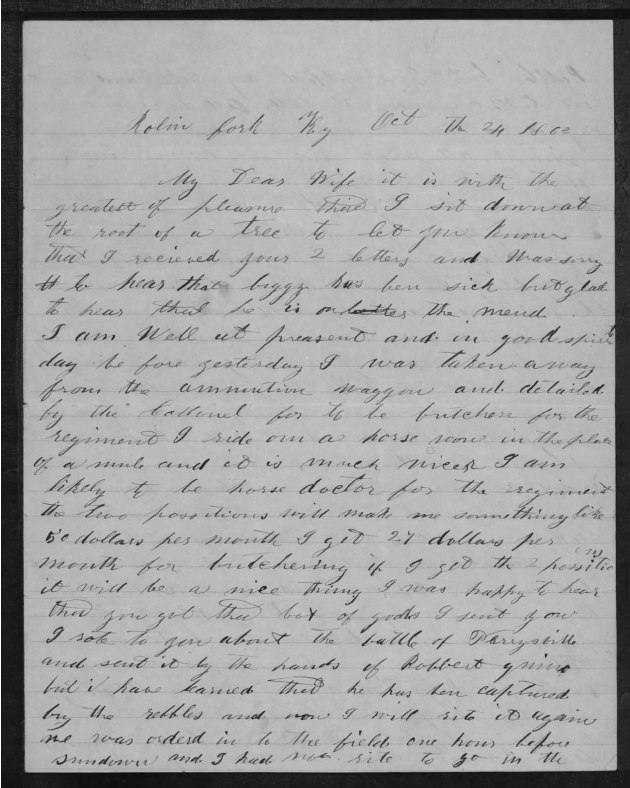
The Civil War Pension file for Robert Z. Cory contains two letters which he wrote home to his wife Matilda. They are reproduced below. Background on the family, his army service, and transcriptions of both letters can be found at The Civil War Letters of Robert Z. Cory.

Monday, January 04, 2021

Excerpts From the Greate Book With Printable Comments

The pdf file I previously published included comments which could only be viewed online. I've revised the file so that it can now be downloaded and printed with comments included: Excerpts From the Great Book Revised 2021

Saturday, January 02, 2021

The Strange Life and Death of Dr. John Calvin Cory

The life of John Calvin Cory was in some ways typical of the pioneer period of American history. He was part of a large family which migrated west from Ohio to Indiana to Iowa. However, there were some aspects of his life and death which were distinctly unusual.

John Calvin Cory was the oldest child of Jeremiah William Cory, Sr. and Dorothy “Dolly” Martin. He was born about 1815 in Pickaway County, Ohio. Nine siblings were to follow before Jeremiah and Dolly moved to northern Indiana in the 1830s. There the family acquired land and farmed. About 1835, John Calvin Cory married Martha Crosson, a daughter of Samuel Crosson, one of the founders of the town of Syracuse, Kosciusko County, Indiana. In 1836, Martha gave birth to John Walker Cory. She died the same year. Details are not available, but perhaps her death was a complication of childbirth. John Calvin Cory found his second bride in the person of Lavinia Stevens. They were married in 1839 in Lavinia's home county of Vermilion, Illinois. By the time of the 1840 census, the couple was living in Elkhart County, Indiana with young John Walker Cory. In the spring of 1846, John Calvin moved west to Iowa Territory. Whether he brought his wife and son with him is not documented. He was the first white settler in what would become Skunk Township of Polk County. In the fall of 1846, J.C.'s brother Isaac Walker and family migrated to Iowa, and in 1849, a wagon train comprising John Calvin's parents and several siblings with their families also made the trek to Iowa.

In 1848 the U.S. government began selling land to settlers in what had by then become the state of Iowa. There is no record that J.C. Cory bought any acreage, implying that he may have moved on. By the time of the 12 November 1850 federal census, John Calvin, Lavinia, and John Walker Cory were living in Pettis Township, Platte County, Missouri. Several members had been added to the household since the 1840 census. Three children had been born in Indiana: Christopher in about 1840, William Tigris, in about 1843, and James Euphrates, in about 1845. Daughter Cassa was born in Illinois about two months before the November 1850 census. Since Lavinia's pattern of childbearing was fairly typical of pioneer women—a birth every two to three years—while in Indiana, the gap of about five years between James and Cassa suggests Lavinia may not have accompanied John Calvin to Iowa in 1846, but rejoined him later. Lavinia's sister, Mary Ann Dunbar, 23, and her daughter, Columbia, age 3, were also living in the J.C. Cory household in 1850. Presumably, Mary Ann was widowed or divorced, but details of the father of Columbia are unknown.

In 1852 or 1853, the lives of the family took an unusual turn. According to findings of fact by a probate judge in the case of John C. Cory's estate, “...sometime after the marriage of John C. Cory and Lavinia Stevens, John C. Cory, about the year 1852 or 1853 abandoned the said Lavinia, his wife, and commenced living and cohabiting with Mary Ann Stevens, a sister of Lavinia and in 1856 John C. Cory removed from the State of Missouri to the State of California, taking Mary Jane (sic) Stevens with him where they continued to reside, and cohabit as man and wife, until the death of said Mary Ann Stevens, about the year 1865.” Mary Ann's daughter Columbia Dunbar also made the trip to California. Apparently, Mary Ann was pregnant when they left Missouri and migrated to California, as her first daughter by John Calvin Cory, named Nebraska, was born in Nebraska Territory in 1856. Their second daughter, Minerva Jane, was born in California about 1863.

While living in Butte County, California, John Calvin Cory was known as Dr. Cory. How or when he acquired this title is uncertain, but a history of Butte County by George C. Mansfield, published in 1918, described Dr. Cory as a “pioneer physician.” Licensing for physicians was lax at best on the frontier. It seems unlikely that he had any formal training. His brother back in Indiana, Robert V. Cory, advertised himself as a veterinary surgeon as well as an auctioneer, also without any evidence of a formal education.

After Mary Ann's death, Lavinia and John Calvin Cory reunited. Quoting again the findings of fact from John Calvin Cory's probate packet: “...upon the death of Mary Ann Stevens in 1865, Lavinia Cory, wife of said John C. Cory came to California in 1866 at the request of her husband, and from thenceforward, until the death of said John C. Cory in Butte Co Cal—lived with him as his wife.” Barring a personal visit, J.C. Cory must have sent a letter or telegram to Lavinia imploring her to take him back. What an interesting and persuasive document that must have been! The 1870 census indicates that Lavinia's brother Stephen C. Stevens, a schoolteacher, was living with J.C. and Lavinia in Plumas County, California. Interestingly, J.C., Lavinia, Nebraska, and Minerva Jane were counted a second time in the 1870 census—in Butte County. Presumably, J.C. Cory had property in both counties.

The death of John Calvin Cory was no less out of the ordinary than his life had been. On 12 February 1871, Dr. Cory was lying on the floor of his house, warming his feet at a fireplace with his head resting on a stool. A rifle held by his brother-in-law Stephen C. Stevens in an adjacent hallway discharged, and the bullet struck Cory in the top of the head, passed through his neck, and lodged in his left shoulder, killing him instantly. Stevens claimed he stumbled on his way to go outside to shoot ducks and that the gun discharged accidentally. Indicted for murder, he was found innocent at trial. After his acquittal, California newspapers had nothing positive to say about Stevens. The Chico Semi-Weekly Review of 6 December 1871 carried a short item which stated “S.C. Stevens, the fancy school teacher who sloshed around here last spring has turned up in San Jose, playing the confidence game. He has a niece along and represents her to be an heiress to considerable wealth, and himself to be possessed of means and property in Chico. He also represented himself as belonging to a benevolent institution, and on the strength of that succeeded in bilking some landlords. The San Jose Patriot gives about a half a column of his eccentricities.” An article with the headline “Turning Out Badly” in The Red Bluff Independent of 21 December 1871 reported that Stephen C. Stevens was “accompanied by his niece, whom, it is said, he represents as an heiress to great wealth. This disclosure is mortifying to those who believed in his innocence, and leaves him to go altogether to the dogs.” The niece in question was Nebraska, fifteen-year-old daughter of John Calvin Cory and Mary Ann Stevens Dunbar. Stephen C. Stevens and Nebraska were later married, on 26 July 1873. Unfortunately for the couple, in 1875 the probate court of Butte County, California denied Nebraska's claim to be an heir of the estate of her father, based on the fact that she and her sister Minerva Jane were illegitimate children of J.C. Cory and therefore ineligible to be his heirs.

California voter registrations of 1875 and 1880 listed S.C. Stevens’ occupation as lawyer, even though all previous documentation was that he was a schoolteacher. Whether he was actually qualified to be a lawyer or whether he merely posed as one is unknown, but he practiced in the Police Courts in Colusa and Tehama Counties. Stevens met a gruesome death on 27 August 1882. On that Sunday afternoon, he went to the home of Ashland Christian near Orland, Tehama County, California. Newspapers varied on the details of the dispute that ensued between the two men, but it centered on a piece of land. The Stockton Evening Mail of 29 August 1882 reported that Stevens was claiming “money as commission of a sale,” while the Chico Weekly Enterprise of 1 September 1882 reported the argument was over a piece of land that both Christian and Stevens laid claim to. In any event, Stevens pulled a knife and threatened the life of Christian, whereupon Christian knocked Stevens down and kicked him to death. The Evening Mail reported, “The deceased was much battered—had his skull fractured and two ribs broken. Christian, who is respectably connected, is under arrest.” The Enterprise described Stevens as “originally a school teacher, a particularly dressy young man” who “managed to worm himself into society,” and who, since being acquitted in his trial for the murder of Dr. Cory in 1871, had made a career as a swindler, confidence man, and claim jumper.

There was no mention of a widow in the news accounts of his murder, and what became of his wife (and niece) Nebraska is unknown. It does not appear that Ash Christian was convicted for the murder and no mention was made of the episode in his obituary when he died at age 69 in 1925. He was described as “one of the prominent men of Orland and was held in high esteem by all who knew him.”

Thursday, September 12, 2019

Excerpts from the Greate Book

Title page of the 1603 edition of Seven Treatises by Richard Rogers.
The book handed down from John Cory of Southold was titled Seven Treatises. When James Enos Cory examined and researched the book in the early twentieth century, the title page of the book, published in London in 1603, was missing (image above is from a copy of the book at Cambridge University). He paid a visit to the Librarian of Congress to find out the title. This and other fun facts (and some fallacies) can be read in a booklet titled Excerpts from the Greate Book compiled by Marge Chilson in 1991. I've scanned the booklet and included a brief introduction of my own in the pdf file at Google Docs. For a more in depth analysis, see The Great Book of John Cory

Sunday, September 08, 2019

The Great Book of John Cory


Yes, I am still alive. It's been a few years since I've posted here, but since I'm boycotting Facebook, Instagram, Twitter, etc., this is the one somewhat social medium open to me. I have just completed an ebooklet about the Great Book, a family heirloom handed down from the Puritan John Cory I of Southold, Long Island. It's publicly available, free of charge, on Google Drive. Enjoy.

Sunday, April 11, 2010

Monochrome Weekend: Pontiac

1949 Pontiac Chieftain, with Silver Streak straight-8 engine and Hydramatic transmission. Captured with a Nikon D90 and Lensbaby Composer. Postprocessing with Silver Efex Pro.

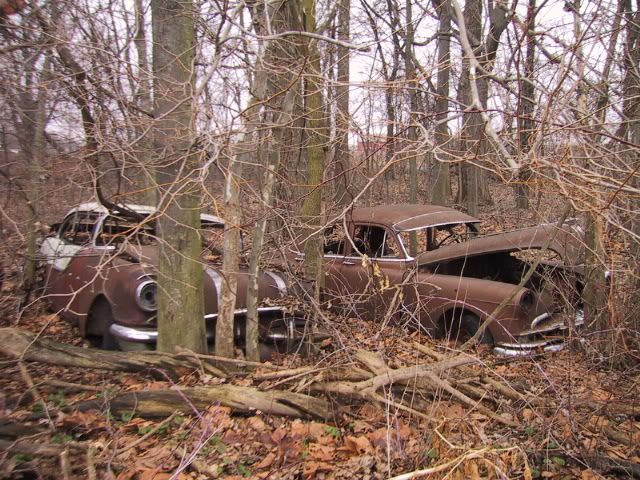
This was the family sedan when I was born in 1952, and I'm pretty sure I would have ridden home from the hospital in this car. When it stopped running, my dad pulled it back into the woods on our farm, where it still sits, along with the '55 Pontiac that took its place.

Here a link another photo showing both cars, and a poem I wrote about them.

More black and white photos at:

Thursday, December 24, 2009

Merry Christmas

My grandfather Lee received this postcard in 1910.


Detail showing the texture of the corduroy letters and the hand-painted border. Looks like the letters were painted after they were glued on the card. Click to enlarge.

Monday, August 03, 2009

Advice to Young Poets

Never pretend
to be a unicorn
by sticking a plunger on your head

by Martín Espada, from The Republic of Poetry
Peter and Daniel Cory, ca. 1986

Sunday, July 12, 2009

Close Encounter of the Wiener Kind

In a recent post, I marked the passing of Oscar Mayer, the 95-year-old scion of the meat empire established by his grandfather, the first Oscar Mayer.

The Wienermobile has been associated with the Oscar Mayer brand since the first one was built in 1936. A fleet of the seven vehicles now tours the country. I missed one which passed through this area recently, but I did manage to find the picture below, documenting a previous encounter which occurred in the mid 90s.

The lad on the left simulating(?) picking his nose shall remain anonymous. He is not related to us. Sons Dan and Pete are standing next to him.

Monday, February 02, 2009

An Early Example of the Dissing of Franklin Pierce

From the January 16, 2009 Chicago Tribune article, "10 Things You Might Not Know About Inaugurations:"

The outgoing president often gets little attention, but rarely has it been as obvious as in 1857, when James Buchanan succeeded Franklin Pierce. The swearing-in ceremony had to be delayed for 20 minutes because officials forgot to pick up Pierce at his hotel and had to go fetch him.

Thursday, December 25, 2008

Merry Christmas

My first Christmas, 1952

Seated center: Jeannie, Dennis, Jim
Next to tree: Carl, Fred, Joan, Skip, Diane
Seated next to tree: Reta
Back row: Walter, Pauline, Donna, Arlene, Bernie (holding yours truly), Ed

Saturday, December 20, 2008

The Perfect Woman

While standing on a ladder to put Christmas decorations atop a bookcase, what to my wondering eyes should appear on the top shelf but a row of old books inherited from my grandfather Lee Cory. Among them was The Perfect Woman, copyright 1915.

Book Cover

I can only speculate as to why he bought this book. It may be that before his marriage, he was beginning the perpetually futile attempt of men to understand the female of the species. Perhaps he bought it with the intent that he could mold his wife into a perfect woman. My grandmother, whom I dearly loved, was small in stature and mild-mannered, but I can't imagine her as a Pygmalion to anybody. Whatever the reason for my grandfather's purchase, the book has survived for almost a century.

Title Page

Here is a picture of "Perfect Womanhood," whatever that may be.


Here is the ideal female figure: the Venus de Capitolina. The caption states that "the waist will be found to be two-fifths the height and nine inches less than the measure at the top of the hips." So a woman 5 foot 5 inches tall should have a 26 inch waist and 35 inch hips. There is no mention in that pre-implant era of what the ideal bust size should be.


Here's a fun and healthful family activity suggested by the author--Mom should dress up in a toga and pose as various statues while the children photograph her.


As noted on the title page, a major topic is "The Diseases Peculiar to Women," including hysteria: ". . .an affection peculiar to women of a nervous or nervous-sanguine temperament, with cheerful, lively and ardent dispositions. It takes its name from the Greek word meaning the womb..." and "the patient bursts into a fit of weeping, soon to be followed by convulsive laughter." Treatment included ignatia, macrotin, and pulsatilla. Exercise, deep breathing, and outdoor life were also recommended.

The author advocates baths of various kinds, including the unpleasant-looking nasal bath below, for a variety of maladies. In an era when medications were largely ineffective and somethimes harmful, this may have been a good idea.


The book doesn't confine itself to perfection of the woman. One of a woman's duties is to produce perfect children. And so we have "The Perfect Boy." It seems the bar was set much higher for women.

Thursday, December 11, 2008

Horsepower

While going through a box of old snapshots, it occurred to me I should be scanning some of these old photos before they and I deteriorate any further. Here are a couple of undated photos of my grandfather, Lee R. Cory, farming with horses. This would have been before my time, when he was using two Ford tractors for farm work.


Thursday, April 17, 2008

Elnathan Cory, Revolutionary Soldier

Mary and I just returned from a trip to Washington, DC, including a tour of Mount Vernon. The Cory family played out their small part in the American Revolution, including the exploits of my ancestor, Elnathan Cory.

Sunday, February 24, 2008

The Person People Call Neal Cory

My father liked to read, but wasn't a writer, as far as I can tell. Other than a post card he sent back to his parents on a trip to the 1939 New York World's Fair, this school essay he wrote in 1931, at the age of twelve, is the only example of his writing I have. The first page is typed, with corrections from the teacher. The second page is handwritten, for reasons unknown to me. I believe I inherited from him a midwestern anabaptist tendency to self-deprecation. If you click on the pages below, they should enlarge for easier reading.


Friday, February 16, 2007

The Tragedy of Cora and Pardner


Pardner Cory

For several months, I have been contemplating, and even started writing, a fictionalization of the story of Pardner and Cora Cory. Pardner was a brother to my great grandfather, Harvey Vaneman Lincoln Cory. I took inspiration from an article in the November 13, 2006 edition of Time, which I happened to pick up from the waiting room to read while I waited for an MR scan to be completed on call one night. The article, by Pico Iyer, is entitled, "How to Write a Short Story," and talks about Alice Munro's book The View From Castle Rock, wherein she transforms her ancestors' lives into fiction.

So far I haven't succeeded in converting my own ancestors' lives into fiction, so I just present the facts.

Item: From the Indianan Republican (yes, it's spelled correctly--the result of a merger of the Daily Indianan with the Warsaw Weekly Republican newspapers), July 24, 1890.

SUICIDE: Cora, the wife of Partner (sic) F. Cory, of Syracuse, committed suicide at that place on Sunday by taking poison. She was only 17 years of age, and previous to her marriage she resided in New Paris and was the daughter of Elias Wright. Cory married her last spring and it is said that the marriage did not prove a happy one and while she was visiting her old home, her husband wrote that she need not return. She did return however, and later committed suicide.

Item: From a collection of Elkhart County, Indiana obituaries at Rootsweb, submitted by Terri Clemens. There is no further attribution. I assume "The News" refers to the Goshen (Indiana) News.

Our readers will remember the talk about a letter from Pardner Cory at the time of his death a couple of weeks ago. The News correspondent at New Paris sends us the letter which reads as follows:

At Home, Nov. 13th, 1890.
To the family, and Mr. and Mrs. Wright,
When I talk to one I mean all. This beautiful morning Nov. 13th gives warning to me to be ready to meet my God in peace. As you know I have been in bad shape ever since dear Cora went home and as I told her many times I could not stay in the world without her, and as it seems as God has a wonderful power and he seems to tell me it wont be long until I can again say good morning dear as I did every morning in this life. And to all who seem to think she and I did not love each other as dear as our own lives, it is a wonderful mistake, for the Sunday she took the arsenic we agreed to love and cherish each other as long as time should last, and O my God, my God, did we not?

I am so much pleased to go and be where man should be, with his companion of course. To those of Syracuse who said I was not half a husband God bless you and help you to be better to your own wife.

To Mrs. Wright, you ought to change your mind if you think I did the work with Cora, when you come home it may be we can talk over it together. But indeed I can not tell you how dear my daughter was to me, but O be a good woman and meet me in Heaven.

Good by Ma & Ma & Pa & all.

Pard.

(Blogger's note: Pard was saying goodbye to his mother and inlaws. His father, Robert V. [Lucky Bob] Cory had died in 1879 from an overdose of an arsenic-containing tonic called Fowler's solution.)

Referring to the above our correspondent says: "It may seem strange to some people that he wrote such a letter two days before his death. Mr. Kitson, his brother in law, explains that. He says Pardner had some 8 or 9 sick spells since the death of his wife and every time he thought he would die. About the time he wrote the letter he had a hard spell which he thought would kill him. He did not die with convulsions as was reported in the papers, heart failure was the trouble. Pardner went to his wife's grave quite often, sometimes he would write in the sand with his fingers "Remember Me" and a few days before his death he did some scribbling on a small flat stone lying on the grave. It was reported that Mrs. Elias Wright found a letter on the grave, but she says she knows nothing about it.

Thursday, May 25, 2006

The Chieftains

The Chieftains

The two Chieftains rest,
surrounded by trees
along a creek,
Eyeless,
headlights gone,
wheels gone,
bellies on the ground,
they face northeast, toward Detroit,
like blind pilgrims facing Mecca in prayer.

They are relics
of the twentieth century, named
for Native Americans
who were extinguished
to make way
for industry and agriculture,
for Henry Ford and Cyrus McCormick.

The vehicles’ rusting chrome trim
once reflected
postwar American optimism.
Their substantial steel skins,
now pierced by hunter’s bullets,
are dulled and corroded by the elements,
the once glossy brown of the older sedan
rendered into a palette
of umber, burnt sienna, and russet.

The white top of the newer two-tone two-door,
which gleamed in the fifties,
is now a dirty eggshell.
The lower surfaces
show only muted traces
of the original copper red
amidst the rust.

Helpless against
destructive human impulse,
the windows of both are shattered,
like all abandoned fenestrated artifacts
of civilization.

Exposed to man and nature,
only vestiges of the interiors remain--
tatters of upholstery, rusted springs.
There is no trace
of the cardboard shelves
behind the back seats
which, baked by sun
through the rear windows,
had emanated a peculiar dry aroma.

Gone are the hood ornaments
from these namesakes of Chief Pontiac--
in 1949
an amber translucent likeness of the chief
which morphed into a sleek faceless airplane
in 1955.

The enormous engines,
stripped of some components,
lifeless under skewed hoods—
the straight-eight Silver Streak
and the V-8 Strato Streak--
are monuments to
America’s addiction
to fossil fuels.

One car carried me,
newly born,
home from the hospital,
the other to Little League games.
The Chieftains, like their drivers,
my parents,
roll no more
down life’s highway,
but rest,
forever rest.

Originally published in Children, Churches and Daddies, Vol. 158, March 22, 2006